
 WhatsApp
 Call
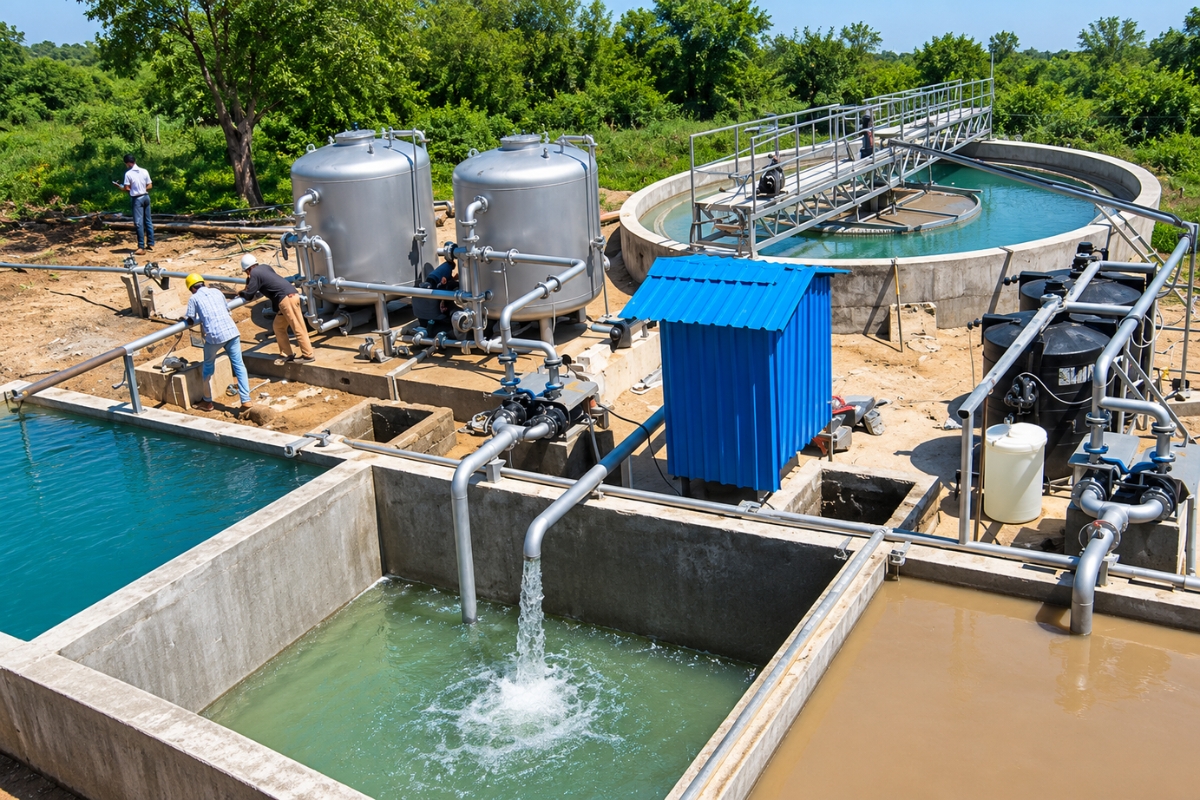
Effluent Treatment Plant (ETP) with Zero Liquid Discharge (ZLD)
Our Zero Liquid Discharge (ZLD) system is designed to treat effluent efficiently, ensuring that all possible water is recirculated back into the process with minimal to zero liquid waste. This process ensures that the final discharge has zero or nearly zero environmental impact, making it ideal for industries with stringent environmental standards.
ZLD Process and Working Principle
The ZLD process includes pre-treatment to reduce TSS, COD, and turbidity, followed by concentration of dissolved solids using membrane technologies such as Reverse Osmosis (RO) combined with Electrodialysis (EDR). This concentration method allows us to achieve over 98% water recovery. The final step involves thermal treatment through Evaporators/Crystallizers, which generates solid waste for disposal or sale as valuable products, such as pure NaCl or Na₂SO₄.
Advantages of ZLD in Effluent Treatment
The Zero Liquid Discharge (ZLD) system offers significant benefits for industries looking to reduce their environmental footprint and maximize water reuse. The process not only minimizes wastewater discharge but also helps create valuable by-products, making it a sustainable solution for wastewater management.
Key Advantages of ZLD Technology
Minimizing wastewater discharge and maximizing water recovery is one of the primary benefits of ZLD technology. The system can help create valuable by-products for sale while reducing environmental concerns. It also reduces dependence on local water sources and supports compliance with applicable environmental legislation.
Key Components of a ZLD System
A basic Zero Liquid Discharge (ZLD) treatment system typically includes several components, tailored to specific wastewater characteristics. These systems are designed to handle varying volumes of dissolved material and contaminants through a combination of physical, chemical, membrane-based, and thermal treatment processes.
Clarifiers, Reactors, and Chemical Feed Systems
Clarifiers and reactors help precipitate metals, hardness, and silica from wastewater. Chemical feed systems support precipitation, flocculation, and coagulation to separate suspended and dissolved contaminants as required by the treatment process.
Filter Press and Ultrafiltration (UF)
Filter presses help concentrate secondary solid waste for easier handling and disposal. Ultrafiltration (UF) removes trace suspended solids and helps prevent fouling in downstream membrane treatment systems.
Reverse Osmosis (RO) and Brine Concentrators
Reverse Osmosis (RO) removes bulk dissolved solids from treated effluent and recovers reusable water. Brine concentrators further concentrate reject streams, reducing the volume of liquid requiring final thermal treatment.
Evaporators and Crystallizers
Evaporators and crystallizers perform the final stage of liquid concentration and evaporation, producing solid residues for disposal or potential recovery as useful by-products, depending on the wastewater composition and system design.
Reliable Zero Liquid Discharge Solutions
Our Effluent Treatment Plants with Zero Liquid Discharge technology provide an effective solution for industrial wastewater management. Designed to maximize water recovery, minimize liquid waste, and support environmental compliance, these systems help industries improve water efficiency and achieve sustainable wastewater treatment.